
What Fiction Gets Right About Optics in Astronomy
Stories like Project Hail Mary have a way of pulling people into the science of distant stars—how we detect them, study them, and begin to understand what they’re made of.
They’re not alone. Films like Interstellar and The Martian have also helped bring real astrophysics and space science into the mainstream, often grounding their stories in surprisingly accurate scientific principles.
With renewed interest in space exploration and astronomy, it’s worth asking a simple question: how do scientists actually study objects that are light-years away?
In reality, we don’t travel to stars or interact with them directly. Almost everything we know about them comes from the light they emit—and how we measure it.
At the core of modern astronomical observation is a simple but powerful concept: isolating very specific wavelengths of light.
That’s where astronomy optical filters play a critical role.
Why Optical Filters Are Essential in Astronomy
Astronomical objects emit light across a range of wavelengths, but not all equally. The resulting pattern of peaks and dips acts like a fingerprint, revealing key information about their composition, temperature, and motion.
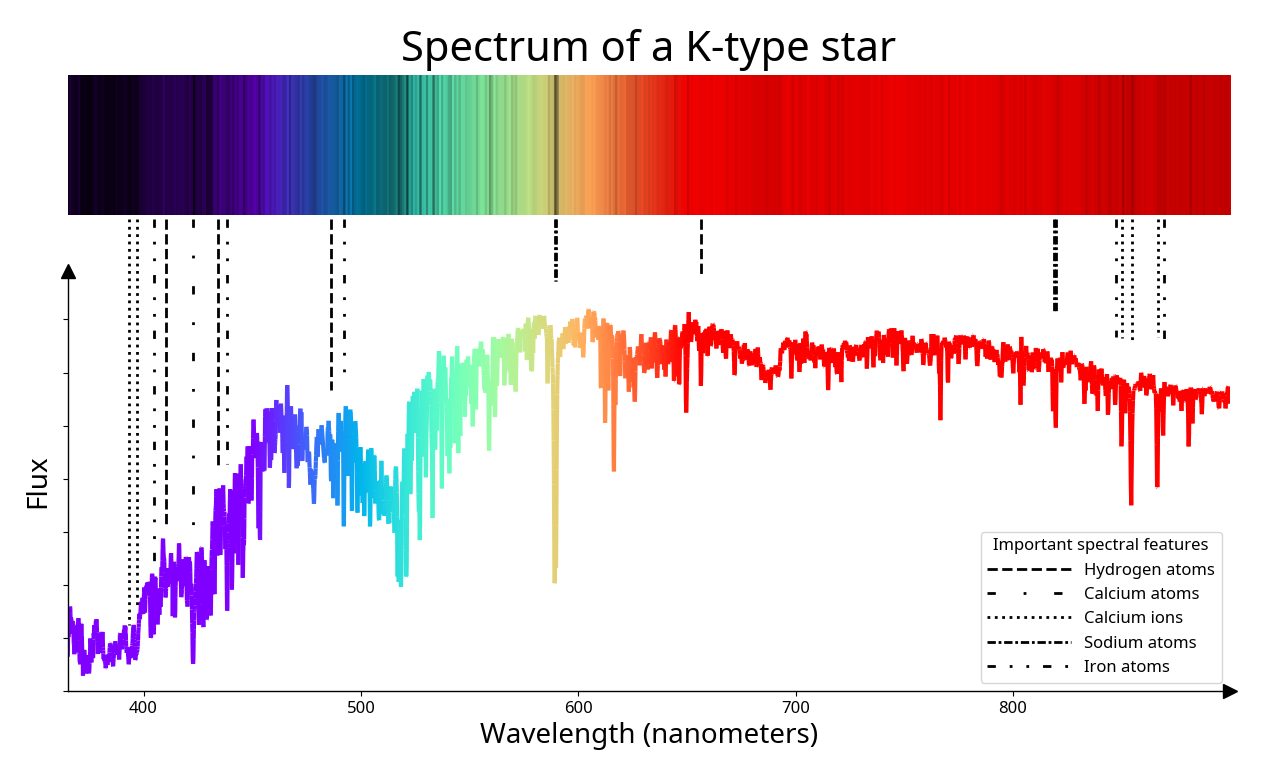
But raw light from distant objects isn’t clean or isolated. By the time it reaches a telescope, it’s mixed with background light, atmospheric effects (for ground-based systems), and other sources of noise.
Optical filters for astronomy allow imaging systems to isolate and analyze the most meaningful parts of that signal by:
- Enhancing contrast between celestial features
- Isolating emission lines from elements such as hydrogen, oxygen, and sulfur
- Reducing noise from unwanted wavelengths and background light
Without this level of spectral control, much of what we observe in astronomical imaging would lack clarity and definition.
For a deeper look at how these filters are constructed and applied, explore our bandpass filters and optical filters pages.
How Bandpass and Narrowband Filters Enable Discovery
Different types of optical filters are used depending on the application and the type of data being collected.
In practice, astronomers aren’t just “taking pictures”—they’re selectively capturing slices of the spectrum to highlight specific physical processes.
Common examples include:
- Narrowband optical filters that isolate emission lines like H-alpha for observing star-forming regions
- Bandpass filters designed for controlled transmission across defined wavelength ranges
- Dual-band filters for capturing multiple spectral features simultaneously
- IR filters that enable imaging beyond the visible spectrum for thermal and chemical analysis
These technologies form the foundation of both ground-based and space-based observation systems.
Optical Filter Coatings in Real-World Astronomy Systems
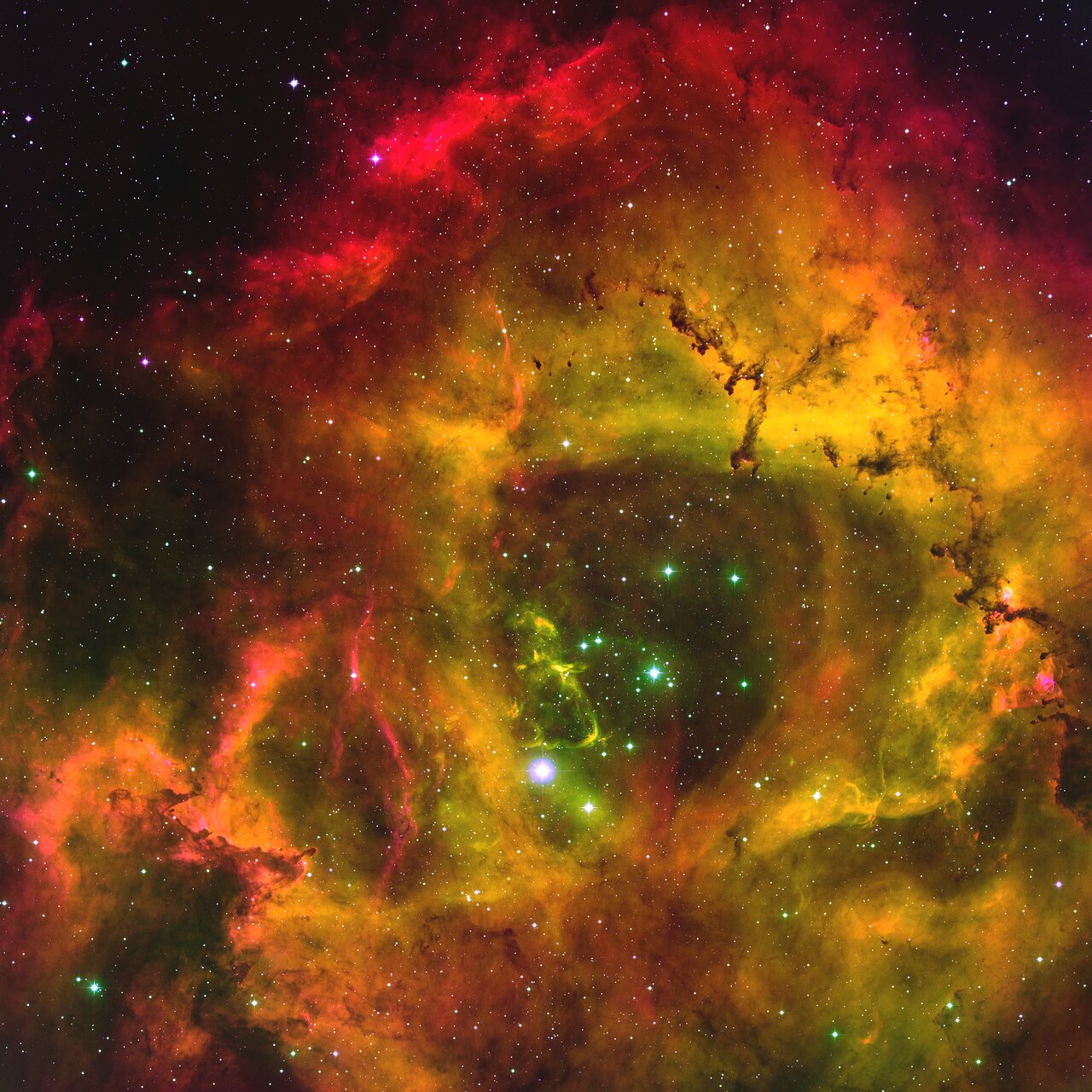
Emission-line image of the Rosette nebula (NGC2237)
While the concept is straightforward, the performance of an optical filter depends heavily on its coating design and manufacturing quality.
At Andover Corporation, we design and produce optical filter coatings that support astronomy and space-based applications across UV, visible, and IR wavelengths.
Our capabilities include:
- Custom bandpass filters tuned to specific emission lines
- Optical coatings designed for environmental durability and stability
- Precision manufacturing with NIST-traceable metrology and testing
- Support for integration into complex optical systems and assemblies
You can also explore how these technologies are applied in real-world systems on our Astronomy & Space page and Notable Projects section.
From Science Fiction to Scientific Reality
What many of these stories get right is that understanding distant stars isn’t about simply “looking farther”—it’s about extracting meaningful data from light.
In Project Hail Mary, much of the scientific problem-solving revolves around analyzing stellar output and identifying anomalies. In reality, that same type of insight comes from isolating and measuring specific wavelengths to detect changes in composition, energy output, or behavior.
Astronomy optical filters are a key part of that process. They allow scientists and engineers to control exactly what light enters an imaging system—and what is excluded.
That control is what turns raw light into meaningful data.
And while the story may be fictional, the physics behind it—and the optics that support it—are very real.
Learn More about Andover's solutions for solar, celestial, and deep-space observation.
Andover Insights & Innovations
Discovering new possibilities in optical filtering

Light Reveals the World. We Refine the View.


Contact Our Team
Ready to discuss your optical needs? Whether you're looking for a quote or have technical questions, our expert team is here to help guide you to the perfect solution.